
Polyurethane Foam: A Practical Guide to PU Foam for Furniture, Mattresses, and Custom Components
Poor foam selection can lead to cushions that feel wrong, mattresses that lose support, or components that do not fit during assembly. The risk grows when buyers source only by price. The better approach is to understand polyurethane foam, its structure, density, resilience, and processing options before ordering.
Polyurethane foam is a cellular polymer made by reacting polyols with isocyanates. In furniture and bedding, flexible polyurethane foam is used for cushions, mattress layers, backrests, and custom components because its density, firmness, resilience, and shape can be adjusted for different applications. Rigid polyurethane foam, by contrast, is mainly used for thermal insulation and other structural purposes rather than soft seating.
What Is Polyurethane Foam?
Polyurethane foam is a lightweight cellular material created through a chemical reaction between a polyol and an isocyanate. During production, the reaction forms a polymer network with a cellular structure. By changing the raw materials, formulation, blowing agents, surfactant system, additive package, and processing conditions, manufacturers can produce foam with very different properties.
That is why polyurethane is not one single product. It is a family of materials. Some polyurethane foam is soft and elastic. Some is dense and supportive. Some is rigid and designed to insulate buildings. Others are engineered for shock absorption, acoustic control, furniture, bedding, packaging, or industrial parts.
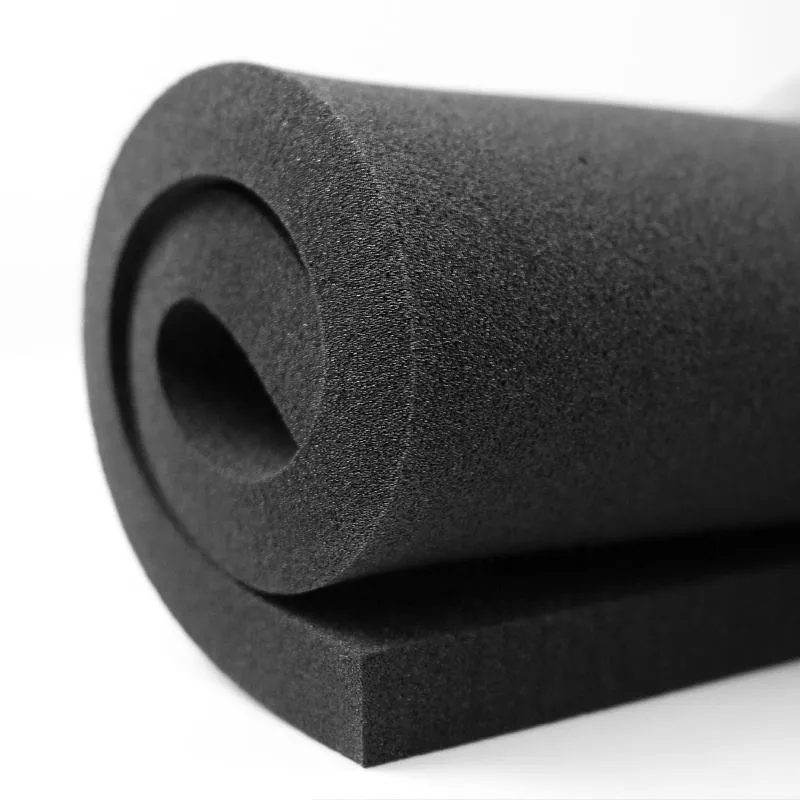
For the furniture and mattress industries, the most important category is flexible polyurethane foam. It compresses under load and then recovers. That makes it well suited to sofa cushions, mattress comfort layers, office chair seating, upholstered backs, and other products where comfort and resilience matter. The Polyurethane Foam Association describes flexible polyurethane foam as a cellular polymer widely used in furniture, bedding, automotive interiors, packaging, and sound-control applications. Polyurethane Foam Association
At Jiangyuan Foam, we focus on this flexible side of polyurethane. We manufacture and process foam for furniture, mattresses, seating, and custom components rather than treating foam as a generic commodity.
How Is Flexible Polyurethane Foam Made?
Flexible polyurethane foam starts with polyurethane chemistry. In simple terms, manufacturers combine polyether polyol with isocyanate and other formulation components. The reaction of polyols and isocyanates creates polyurethane polymers, while gases formed or introduced during the process create the foam’s cellular structure.
The process sounds simple, but control matters at every stage.
A typical production path includes:
1. Raw material preparation.
2. Metering and mixing.
3. Foaming.
4. Rise and cell formation.
5. Curing.
6. Slicing or block cutting.
7. Secondary fabrication.
8. Quality inspection.
The Polyurethane Foam Association explains that flexible foam is commonly produced in large slabstock buns, allowed to cure, and then cut and shaped into smaller pieces. Polyurethane Foam Association
At Jiangyuan, this process continues beyond basic foam blocks. Our in-house manufacturing chain includes foaming, curing, slicing, CNC cutting, lamination, profiled shaping, and compression packaging.
This matters for B2B buyers. You may not need to purchase a full foam block and complete the cutting yourself. You can source a polyurethane foam sheet, a cut-to-size cushion core, a laminated layer, or a finished profiled component based on your drawing or BOM.
That reduces extra handling.
It also gives the supplier more responsibility for dimensional accuracy, batch control, and final usability.
What Is the Difference Between Flexible and Rigid Polyurethane Foam?
The word “foam” covers products with very different mechanical properties.
The two main categories buyers often encounter are flexible polyurethane foam and rigid polyurethane foam.
| Property | Flexible Polyurethane Foam | Rigid Polyurethane Foam |
|---|---|---|
| Main behavior | Compressible and resilient | Hard and dimensionally stable |
| Typical use | Cushions, sofas, mattresses, seating | Insulation, panels, building systems |
| Cell structure | Usually more open | Often closed-cell |
| Comfort use | Yes | No |
| Thermal insulation | Limited | Strong |
| Common form | Blocks, sheets, moulded foam, cut parts | Boards, panels, spray systems |
| Jiangyuan focus | Yes | No |
Rigid foam is widely used for building insulation, refrigeration, panels, and thermal insulation because its closed-cell structure makes it an effective insulator. Products such as polyurethane insulation, polyurethane insulation foam, and some forms of spray foam belong to this side of the market.
Flexible foam serves a different need. It is designed for comfort, support, resilience, energy absorption, and shape adaptation.
This distinction is important because buyers sometimes search for “PU foam” without specifying the type of foam they need.
If you are sourcing:
- sofa cushion cores,
- mattress layers,
- office chair foam,
- upholstered furniture components,
- or soft custom-cut parts,
you are normally looking for flexible PU foam rather than rigid foam.
Jiangyuan does not position itself as a supplier of rigid polyurethane foam for building insulation. Our core manufacturing direction is flexible foam for furniture, bedding, seating, and selected custom component applications.
How Does Foam Density Affect Performance?
Density is one of the first specifications buyers should understand.
Foam density describes how much material is present within a given volume. It is commonly expressed in kilograms per cubic meter, such as 25 kg/m³, 30 kg/m³, or 40 kg/m³.
Higher density does not automatically mean “harder.”
This is a common sourcing mistake.
Density and firmness are related to performance, but they are not the same measurement. A manufacturer can formulate foam with different firmness levels at similar densities.
As a simple example:
| Density Range | Typical Positioning | Common Applications |
|---|---|---|
| Lower density | Light-duty, softer, cost-sensitive | Some padding and light-use components |
| Medium density | General furniture use | Sofa cushions, backs, mattress layers |
| High density | Higher material content and support | Premium seating, durable components |
| Specialized density | Project-specific | Layered mattresses, engineered components |
A high-density foam can be useful where the buyer wants greater support or durability, but final performance also depends on firmness, resilience, cell structure, thickness, and design.
This is why we ask buyers for more than one number.
For a sofa project, for example, we may need to know:
- target density,
- firmness,
- cushion thickness,
- seat geometry,
- expected load,
- whether the foam will be laminated,
- whether the part needs CNC profiling,
- and whether flame retardant requirements apply.
The same principle applies to a mattress. One layer may use lower-density soft foam for comfort, while another layer may use higher-density support foam.
Good foam selection is about the whole structure, not one isolated specification.
Which Foam Types Are Best for Sofas and Upholstery?
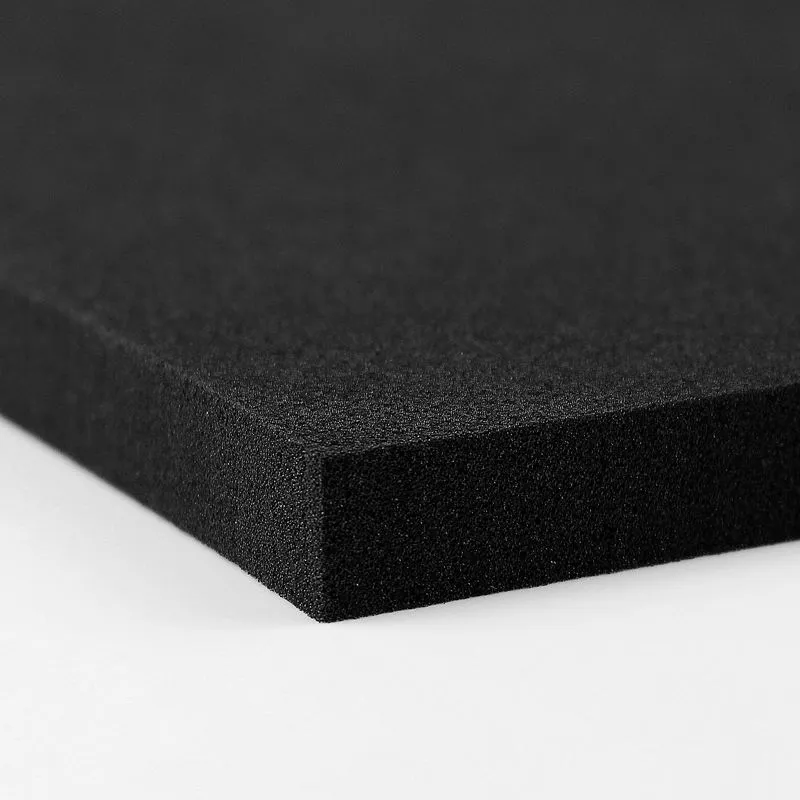
For sofas and upholstered furniture, upholstery foam must balance comfort, recovery, shape stability, and cost.
The most common options include standard PU foam, high resilience foam, and higher-density foam grades.
Standard polyurethane foam can work well for many general furniture applications. HR foam is often selected when the buyer wants faster recovery, better resilience, or a more responsive cushion feel.
Typical furniture uses include:
- sofa seat cores,
- back cushions,
- armrest padding,
- office chair cushions,
- contract furniture seating,
- hospitality furniture,
- profiled backrests,
- and multi-layer cushion structures.
The right cushion specification depends on the end product.
A deep lounge sofa needs a different feel from an office chair.
A hotel bench seat may need firmer support.
A premium sofa may use a multi-density construction with a softer upper layer and a more supportive core.
This is where custom fabrication becomes useful. Jiangyuan can supply not only foam blocks, but also assembly-ready cushion components made from drawings, BOMs, or dimensional requirements.
For example, a furniture manufacturer can send us the required seat-core geometry. We can then cut, profile, and laminate the foam before shipment. That can reduce the buyer’s own cutting work, offcut waste, and secondary handling.
For buyers comparing suppliers, ask a practical question:
Do you need foam, or do you need a finished foam component?
Those are not always the same purchase.
How Is Polyurethane Foam Used in Mattresses?
Polyurethane foam is widely used in bedding, including mattresses, mattress toppers, pillows, and comfort layers. The Polyurethane Foam Association notes that flexible polyurethane foam can be engineered to provide different levels of support and comfort in sleep products. Polyurethane Foam Association
A mattress may contain one type of foam or several foam types layered together.
Common options include:
- standard PU foam,
- high resilience foam,
- high-density support foam,
- memory foam,
- laminated comfort layers,
- and zoned or profiled structures.
Memory foam is a viscoelastic type of foam that responds more slowly after compression. Standard PU foam usually recovers faster.
Each serves a different purpose.
A mattress manufacturer may use one foam for surface comfort, another for pressure distribution, and another as a supporting base.
At Jiangyuan, we can supply raw material, sheets, or processed mattress components. That includes cut comfort layers and laminated structures made to a customer’s thickness, density, firmness, and dimensional requirements.
We can also support compression packaging for suitable orders.
Compression is valuable in export projects because foam occupies a large volume relative to its weight. Reducing shipping volume can improve container use, although the final packaging design must be matched to the product structure and recovery requirements.
For overseas mattress buyers, specification consistency is especially important. A small change in density, thickness, or firmness can alter the finished product feel.
That is why batch records and quality checks matter.
What Is Custom Cut PU Foam and Why Does CNC Cutting Matter?
Custom cut foam allows a buyer to receive parts closer to their final assembly condition.
Instead of buying rectangular foam blocks and creating every shape in-house, the buyer can order foam that is already cut to size or profiled.
CNC cutting helps manufacturers produce repeatable shapes with better dimensional control.
Common CNC foam operations include:
- straight cutting,
- contour cutting,
- grooves,
- curved profiles,
- waves,
- wedges,
- stepped shapes,
- recesses,
- and application-specific profiles.
A buyer may search for terms such as:
- custom foam cutting,
- CNC cut foam,
- cut-to-size foam,
- moulded foam,
- foam components OEM,
- or custom foam solutions.
These searches usually signal a different need from a standard foam block order.
The buyer is no longer sourcing only material.
They are sourcing processing capacity.
At Jiangyuan, this is one of our main positioning points. Our production chain extends from the original foam block into the finished component stage.
For example, we can manufacture:
- sofa seat cores,
- shaped backrest foam,
- mattress comfort layers,
- multi-layer laminated parts,
- and custom profiled soft foam components.
You can learn more about our custom foam components/custom-foam-components and factory manufacturing capabilities if your project requires more than basic foam sheets.
Can Polyurethane Foam Be Used for Acoustic and Soundproof Applications?
Flexible foam can be used in certain acoustic applications because its cellular structure can help absorb sound energy.
You may see products described as:
- acoustic foam,
- soundproof foam,
- wedge foam,
- pyramid foam,
- acoustic insulation,
- or sound-absorbing panels.
However, there is an important distinction between sound absorption and true soundproofing.
Foam mainly helps reduce reflected sound and reverberation inside a space. It does not automatically block sound transmission through walls like a heavy barrier system.
Density, thickness, airflow resistance, cell structure, profile geometry, and installation method all influence acoustic performance.
This is also an area where buyers should ask for actual test data rather than rely only on product appearance.
For Jiangyuan, acoustic foam is a technically possible application, but our existing project documentation notes that NRC testing for this product direction is not yet complete. For that reason, we do not present acoustic performance claims as a confirmed standard specification without project verification.
That is a useful lesson for buyers in general:
Do not buy acoustic foam based only on shape. Ask what has actually been tested.
What About Spray Foam, Pour Foam, Automotive Foam, and Other PU Foam Types?
Polyurethane appears in many industries, so online searches often mix very different foam products together.
Here is a quick guide.
Spray Foam
Spray foam is commonly used for insulation and sealing. It expands after application and is often used in walls, roofs, gaps, and building envelopes.
It is not the same production category as the flexible slabstock foam used in sofas and mattresses.
Pour Foam
Pour foam refers to polyurethane systems that are mixed and poured into a cavity or mold where the chemical reaction occurs. Depending on the formulation, the result can be flexible or rigid.
Rigid Foam
Rigid foam is associated with heat insulation, building panels, refrigeration, and other structural uses. It generally has a closed-cell structure.
Automotive Foam
The automotive industry uses polyurethane in seating, headliners, noise-control components, and molded parts. The PFA notes that flexible foam is widely used in transportation applications. Polyurethane Foam Association
However, automotive OEM supply can require specific quality systems and approvals.
Jiangyuan does not currently position itself as a passenger-car OEM Tier 1 foam supplier. Non-passenger seating projects may be evaluated individually when drawings and requirements are provided.
That distinction protects both the customer and the manufacturer from unrealistic promises.
What Should Buyers Know About Compression, Flame Retardancy, and Export Requirements?
International foam sourcing involves more than product dimensions.
Three areas often affect the success of a project:
Compression Packaging
Foam is bulky. Vacuum compression can reduce shipping volume for suitable products.
But compression must be planned carefully.
The manufacturer should consider:
- foam density,
- thickness,
- recovery behavior,
- roll diameter,
- number of pieces per roll,
- container dimensions,
- and expected storage time.
- The goal is not simply to make the package smaller.
The goal is to reduce volume without damaging the foam’s ability to recover.
Flame Retardant Requirements
Some projects require flame retardant foam or specific fire safety performance.
A flame-retardant additive may be incorporated into a formulation, but buyers should never assume that one foam meets every standard.
Fire safety requirements vary by market, product type, and end use.
Hotel furniture, public seating, mattresses, and residential products may all face different rules.
Target-Market Compliance
For export projects, compliance should be discussed before sampling.
That may include requirements related to:
- chemical restrictions,
- product testing,
- flammability,
- emissions,
- labeling,
- and supporting documents.
This is especially important because a component standard and a finished-product standard may not be the same.
At Jiangyuan, our preferred process is to review the target market and application before confirming the final specification.
That can prevent a costly situation where a sample performs well physically but does not match the customer’s regulatory needs.
How Do You Choose a Reliable Polyurethane Foam Manufacturer?
A good polyurethane foam manufacturer should do more than quote a price per cubic meter.
For recurring B2B orders, evaluate the whole manufacturing system.
Here are the most important questions to ask:
1. Does the supplier manufacture the foam in-house?
Factory ownership gives the supplier more direct control over raw materials, formulation, process records, and batch consistency.
At Jiangyuan, foaming, curing, cutting, and secondary processing are handled within our own production chain.
2. Can the supplier process foam after foaming?
If you need cut parts, profiled components, or laminated structures, confirm whether the supplier owns those capabilities.
Otherwise, your order may move between multiple subcontractors.
That can increase lead time and reduce traceability.
3. Can the supplier document quality?
A practical quality process should include:
- incoming material inspection,
- foaming parameter records,
- curing control,
- density checks,
- hardness checks,
- resilience sampling,
- and pre-shipment inspection.
Ask whether the supplier can provide batch data when needed.
4. Can they work from drawings and BOMs?
If you are a furniture or mattress manufacturer, this is often more important than choosing a supplier with the widest catalog.
A supplier that can interpret your drawing, BOM, dimensions, density, and final application can function as a production partner rather than a simple material trader.
Explore our [custom foam manufacturing options](/custom-foam-components/) for this type of project.
5. Do they understand the end use?
Foam for a sofa, a mattress, an office chair, and a packaging insert may look similar at first glance.
But the desired mechanical properties can be very different.
The supplier should ask how the foam will be used.
6. Can they support export projects?
International buyers need accurate documents, packing plans, and realistic production schedules.
Our company overview explains how Jiangyuan works with overseas furniture and mattress customers, while our environmental responsibility approach covers our production practices and material-handling principles.
Why Furniture and Mattress Buyers Work With Jiangyuan Foam
Our business model is built around a simple idea:
- We do not only sell foam. We help customers buy the right level of manufacturing.
- Some customers need foam blocks.
- Others need polyurethane foam sheet material.
- Some need finished cushion cores.
- Others send us a BOM and expect assembly-ready components.
- That flexibility is especially useful for:
- sofa manufacturers,
- upholstered furniture companies,
- mattress factories,
- office furniture brands,
- hospitality furniture suppliers,
- importers,
- wholesalers,
- and distributors.
Our factory is located in Zhoucun, Zibo, Shandong, an important upholstered-furniture production region.
We keep the major manufacturing steps in-house, from foaming through secondary fabrication. That gives us better control over specifications and lets us respond to both material orders and component-level projects.
For the right buyer, the value is not only factory-direct pricing.
It is fewer processing steps after delivery.
Less foam waste.
Better repeatability.
And a clearer line of responsibility when specifications matter.
If you already know your foam density, dimensions, firmness, or BOM, you can send us your project requirements for review.
FAQ
Is PU foam the same as polyurethane foam?
Yes. PU foam is a common abbreviation for polyurethane foam. The term can refer to many foam types, including flexible and rigid materials, so buyers should always specify the intended application.
What is flexible PU foam used for?
Flexible PU foam is commonly used in furniture cushions, mattresses, pillows, seating, packaging, and selected acoustic applications. Its cellular structure allows it to compress and recover, making it useful where comfort or shock absorption is needed.
Is higher-density foam always firmer?
No. Density and firmness are different properties. High density means more material per unit volume, while firmness describes how resistant the foam feels under compression. A manufacturer can create different firmness levels within similar density ranges.
What is the difference between memory foam and standard polyurethane foam?
Memory foam is a viscoelastic polyurethane foam with slower recovery after compression. Standard flexible polyurethane foam usually rebounds faster. The best choice depends on whether the product needs contouring, pressure relief, resilience, or faster recovery.
Can polyurethane foam be custom cut?
Yes. Flexible foam can be sliced, contour cut, CNC cut, laminated, grooved, or profiled into custom components. At Jiangyuan, we can work from drawings, BOMs, and dimensional requirements.
Can flexible polyurethane foam be used as insulation?
Flexible foam can provide some acoustic and limited thermal effects, but it is not the same as rigid polyurethane foam used for thermal insulation or building insulation. For construction insulation, rigid closed-cell foam is usually the relevant product category.